TERM // 01
Astronomical Unit (AU)
A giant space ruler! 1 AU is the average distance from Earth to the Sun (about 93 million miles).

Aerospace Exploration & Research — live planetary & lunar tracking, kid-friendly space calculators, printable cadet certificates, exoplanet search, and team operations.
| Body | Sun (AU) | Earth (AU) | 1-Way Signal | Observing Window | Est. Transit | Speed |
|---|---|---|---|---|---|---|
| Mercury | 0.357 | 0.639 | 5.3 min | Solar Conjunction (Glare) | ~74 days | 51.8 km/s |
| Venus | 0.72 | 1.076 | 8.9 min | Evening Sky (40.5°) | ~124 days | 35.2 km/s |
| Earth | 0.993 | 0.0 | 0.0 sec | Observer Reference | 0 days | 30.0 km/s |
| Mars | 1.617 | 1.154 | 9.6 min | Evening Sky (97.5°) | ~133 days | 22.7 km/s |
| Jupiter | 5.327 | 4.413 | 36.7 min | Near Opposition (All Night) | ~509 days | 12.8 km/s |
| Saturn | 9.466 | 10.285 | 1h 26m | Evening Sky (32.9°) | ~3.2 yrs | 9.7 km/s |
| Uranus | 19.451 | 19.526 | 2h 42m | Evening Sky (84.2°) | ~6.2 yrs | 6.7 km/s |
| Neptune | 29.91 | 30.805 | 4h 16m | Evening Sky (25.3°) | ~9.7 yrs | 5.5 km/s |
Giant bursts of energy and super-hot gas blasting off the Sun that can create auroras on Earth.
This certifies that
has completed the Vortex Ghost Cadet Academy planetary tracking, solar system scale, and orbital science challenge.
A giant space ruler! 1 AU is the average distance from Earth to the Sun (about 93 million miles).
The curved path a planet, moon, or spacecraft follows around a bigger object because of gravity.
A planet that orbits a star outside our own solar system.
How long light or a radio signal takes to travel through space. Light is super fast, but space is huge!
Giant bursts of energy and super-hot gas blasting off the Sun that can create auroras on Earth.
The total change in speed a rocket needs to escape Earth's gravity and steer to another world.
Earth's rigid lithosphere is broken into major tectonic plates that diverge, converge, or slide past one another along transform faults, driving mountain building, volcanism, and earthquakes.
Sudden slip along a fault releases strain energy as compressional P-waves, shear S-waves, and surface waves that seismographs record to locate hypocenters and map crust/mantle structure.
Central Alabama sits right along the transition between ancient crystalline metamorphic/igneous rocks of the Piedmont and folded Paleozoic ridges, valleys, and karst terrain toward the Appalachians.
Farthest human-made object in space, sampling interstellar plasma and cosmic rays beyond the heliosphere.
Fastest spacecraft ever built, flying directly through the Sun's outer corona to trace solar wind acceleration.
Conducting detailed reconnaissance of Jupiter's icy moon Europa to investigate habitability beneath its ice shell.
6.5-meter infrared space observatory performing transit spectroscopy on exoplanets and deep-field cosmology.
No major solar flare records returned in the current 14-day window.
No recent CME events returned in the current 14-day window.
Awaiting daily NASA APOD synchronization.

This illustration shows three possible interiors of the seven rocky exoplanets in the TRAPPIST-1 system, based on precision measurements of the planet densities. Overall the TRAPPIST-1 worlds have...
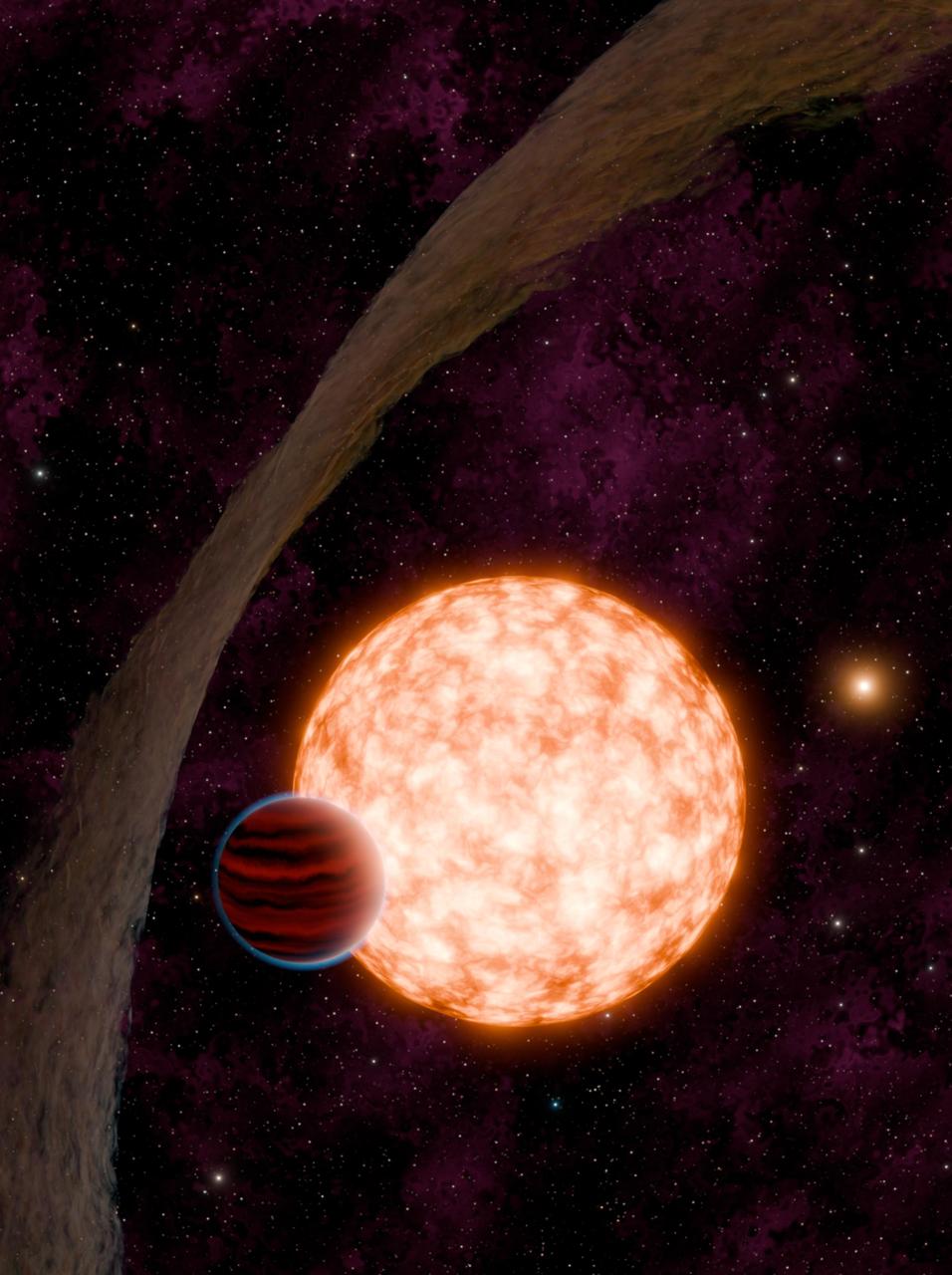
Artist's concept of a young, newly discovered planet, exposed to observation by a warped debris disk. https://photojournal.jpl.nasa.gov/catalog/PIA26601
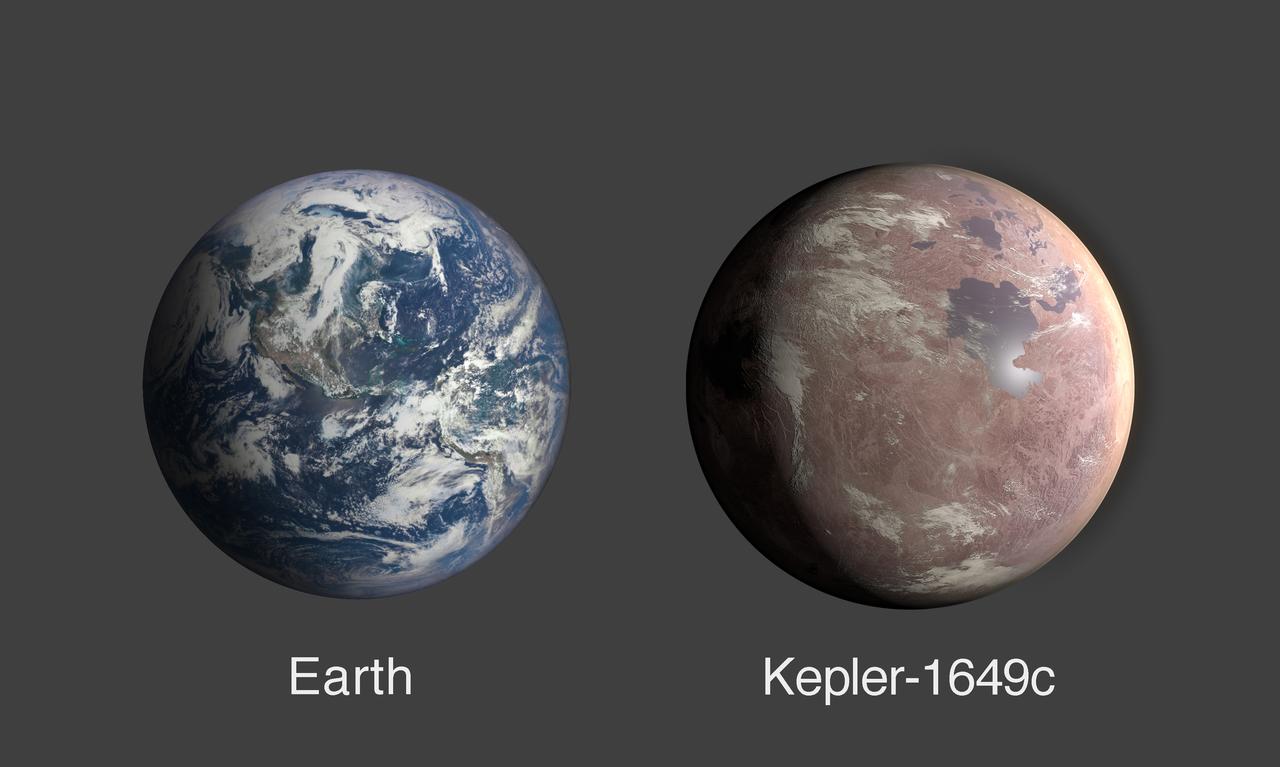
A comparison of Earth and Kepler-1649c, an exoplanet only 1.06 times Earth's radius. Labeled Art Credit: NASA/Ames Research Center/Daniel Rutter
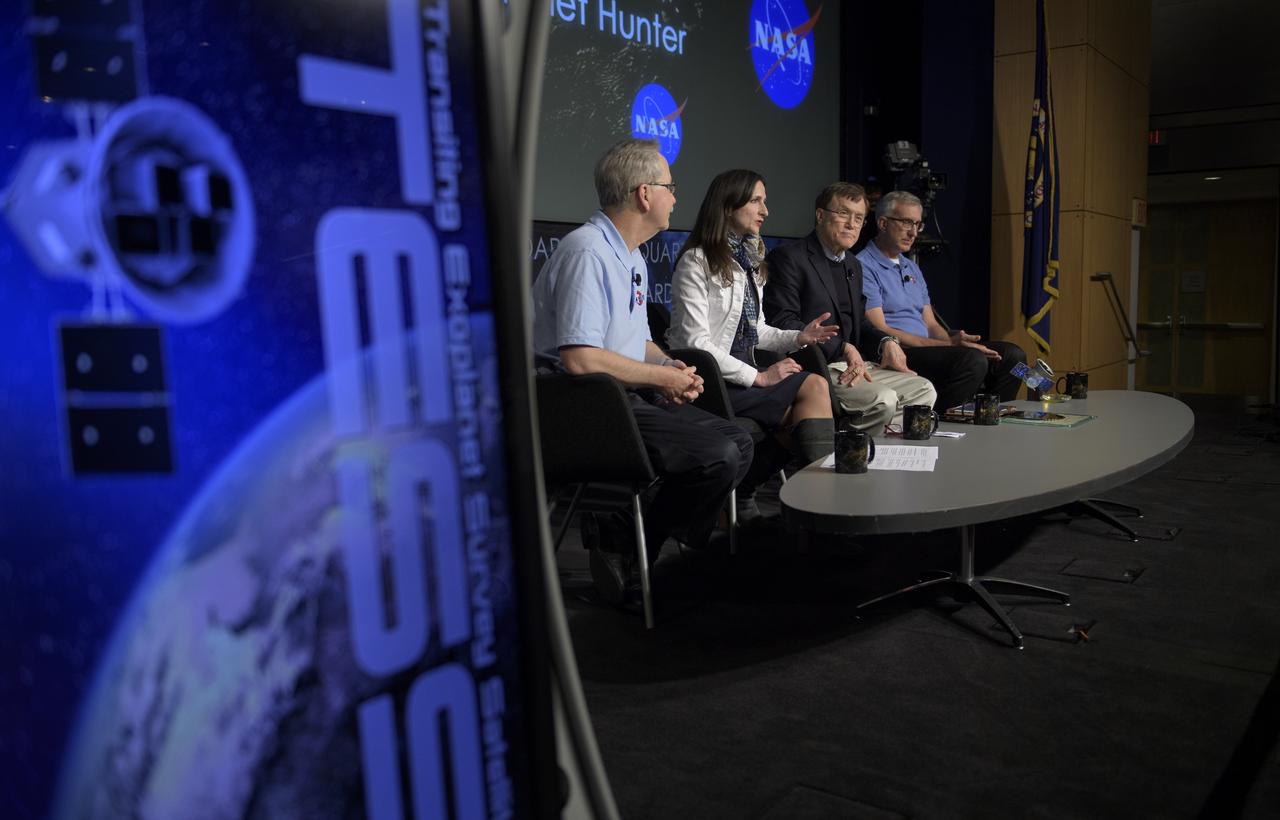
NASA Astrophysics Division director Paul Hertz, left, Sara Seager, TESS deputy director of science, MIT, George Ricker, TESS principal investigator, MIT Kavli Institute for Astrophysics and Space...
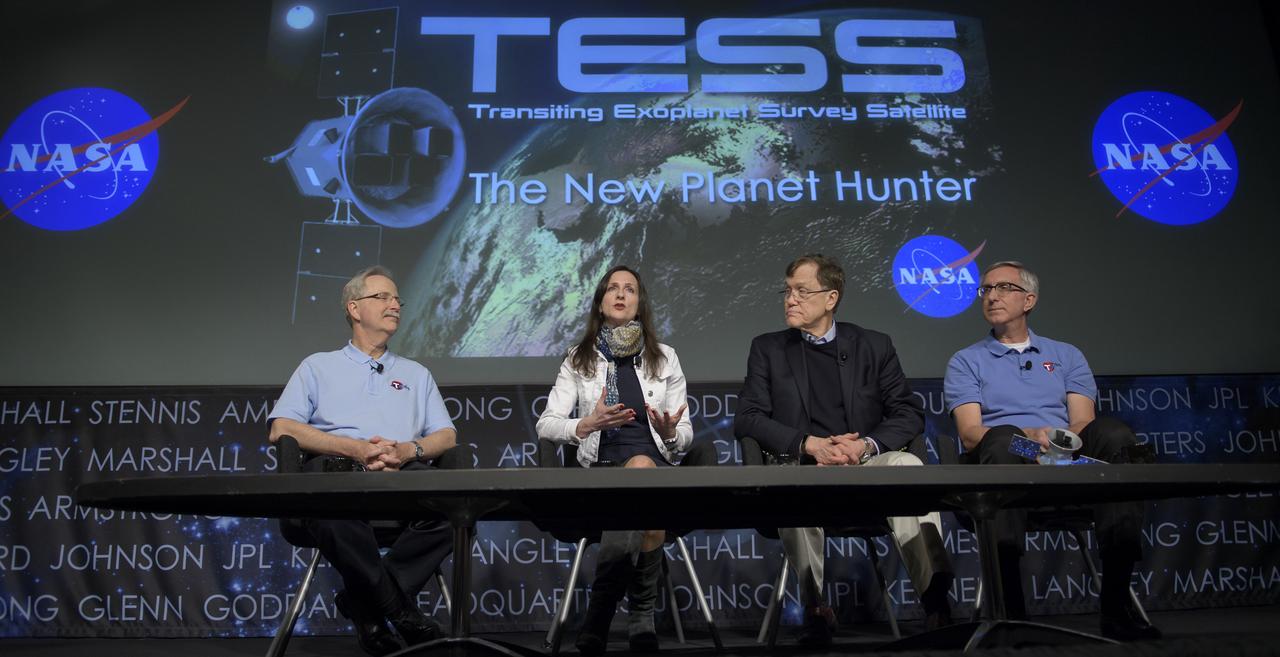
NASA Astrophysics Division director Paul Hertz, left, Sara Seager, TESS deputy director of science, MIT, George Ricker, TESS principal investigator, MIT Kavli Institute for Astrophysics and Space...

NASA Astrophysics Division director Paul Hertz, left, Sara Seager, TESS deputy director of science, MIT, George Ricker, TESS principal investigator, MIT Kavli Institute for Astrophysics and Space...
No team missions posted yet. Log in with callsign VGA1 below to post, edit, or delete team missions.
Project burst altitude, total flight time, and recovery coordinates from launch site wind profiles.
Calculate total velocity change (Δv), propellant mass ratio, and cruise duration across targets.
No visitor transmissions yet. Be the first cadet or explorer to sign the Vortex Ghost logbook!
Sign in under Team Command (callsign VGA1) to upload or delete Moon and Night-Sky photos.
No Moon or Sky photos uploaded yet.
Ruggedized ground and boundary-layer sensor housing engineered for rapid deployment and convective inflow profiling.
| Mass | 640 g |
| Power Bus | 7.4V Li-Ion / Regulated 5V & 3.3V |
| Sensors | Barometric Pressure, Temp, RH, GNSS |
| Comms / Link | Starlink / LoRa Telemetry Packet |
Lightweight sounding package designed for vertical thermodynamic profiling, telemetry tracking, and post-flight recovery.
| Target Ceiling | 24,000+ m AGL |
| Power Bus | Lithium Primary Pack |
| Sensors | PTU + Altitude + IMU Attitude |
| Recovery | GPS Beacon + High-Vis Shell |
Field-hardened telemetry relay and real-time logging interface linking ground/air experiments with mission control.
| Platform | Field Vehicle / Mobile Command |
| Power Bus | 12V Vehicle Bus + Isolation |
| Uplink | Low-Earth Orbit Satellite + Cellular |
| Logging | UTC Timestamped JSON / CSV |